Period instruments are great, but I still hanker for some ‘inauthentic’ performances

I am a big fan of historically informed performance (HIP) in classical music, also known as period instrument performance, also known simply as “authentic performance.” The idea behind it is a good one: we should seek to be faithful to the approach and style prevalent when the music was written, as well as the types of instruments used at that time.

I am an enthusiastic attendee at the bi-annual Boston Early Music Festival, where I happily nerd out on authentic Baroque operas, chamber music and orchestral works. One of my favorite activities is walking around the Exhibition, and seeing all the period instrument makers hawking their wares.

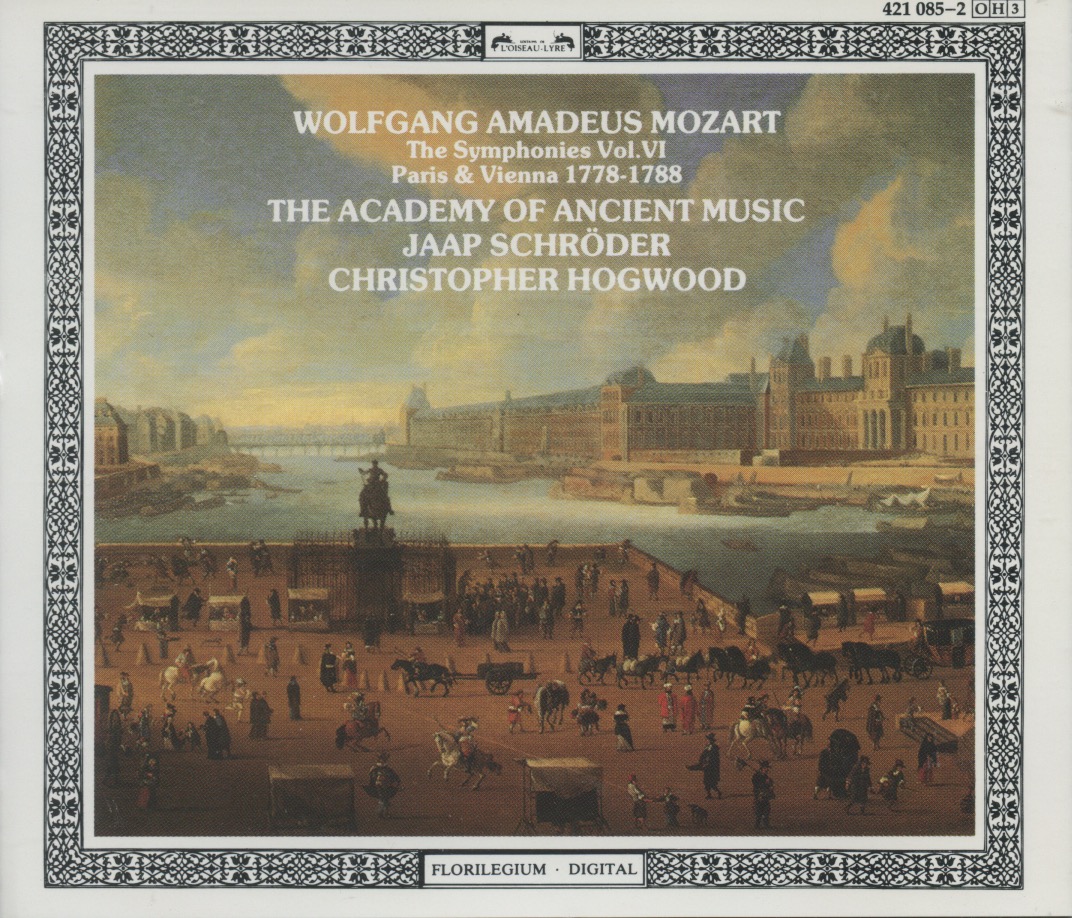
Who could doubt the value of historically informed performances after hearing the Christopher Hogwood/Jaap Schroeder set of the Complete Mozart Symphonies with the Academy of Ancient Music? The insights afforded by hearing the music as Mozart would have conceived it is really eye-opening.
There’s a big drawback to the whole movement, though. It’s that we don’t actually know how works would have been played in Mozart’s time. Recordings weren’t available until the late 19th Century. Supporters of HIP have tried to get around this by studying musical treatises and reviews of the time, painstakingly reproducing the instruments prevalent in the Baroque and Classical eras and even examining paintings of period instruments and ensembles in an attempt to divine performance practices.

The severest critics of the movement see the whole thing as a projection of 20th century assumptions onto the past. No less a leading light of the period performance revolution than the English conductor John Eliot Gardiner has pushed back against the term “authentic” when applied to performances that seek to emulate practices of the past. In a profile published in 1996 in Billboard, Gardiner says, “My enthusiasm for period instruments is not antiquarian or in pursuit of a spurious and unattainable authenticity, but just simply as a refreshing alternative to the standard, monochrome qualities of the symphony orchestra.”

While we may never attain true “authenticity” in performances of music from past centuries, there is value, in my opinion, in striving to imagine the music as composers and audiences would have heard it when it was written. If nothing else, it may lead to performances that are more balanced and nuanced than those that we hear today of those works. That’s because modern performance practices, as critics point out, are biased toward conventions that became prevalent during the Romantic period of the middle-to-late 19th century.

Gardiner, for one, has been a leader in bringing period performance out of the pre-Classical and Classical eras in which it got its start and solidly into the 19th century. His critically acclaimed recording with the Orchestre Revolutionnaire et Romantique of Schumann’s symphonies and symphonic fragments, for example, demonstrates that period performance practices offer new ways to hear even works written in the Romantic era.

In his liner notes to the set, Gardiner says he seeks to “explode” the myths surrounding Schumann’s music, such as the myth that his symphonic works are under-orchestrated — beliefs that led composers like Gustav Mahler and conductors like Felix Weingartner to re-orchestrate Schumann’s symphonies to correct perceived deficiencies.

“Our starting point is the removal of the false patina of late-Romantic orchestral sonorities which is totally alien to Schumann’s aesthetic and ideals and yet persists in some performances today using conventional symphonic forces,” says Gardiner. “So much of what troubled [later] composers and conductors … about Schumann’s symphonic writing … simply evaporates in an accomplished period performance.”
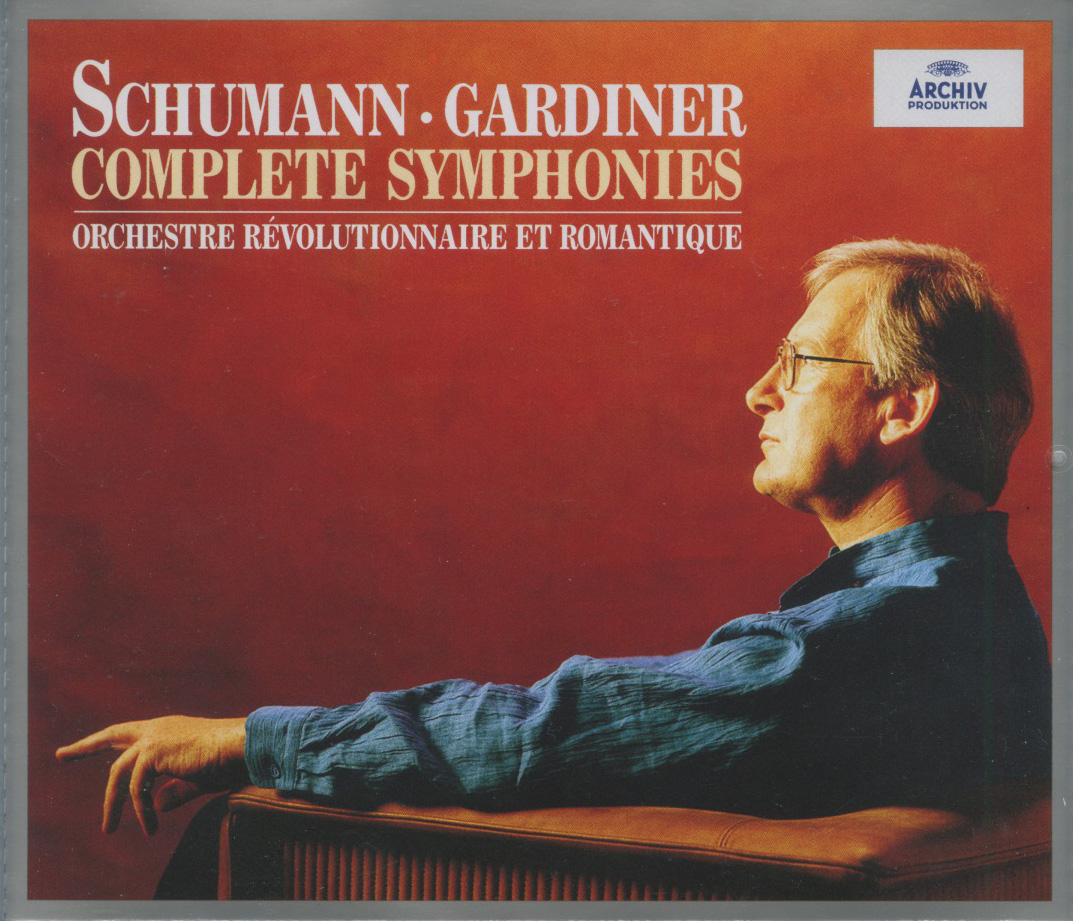
Especially important, according to Gardiner, is to reduce the “expanded sonority” of late 19th century orchestras to something like the size of the orchestra Schumann was writing for. “The moment you reduce the proportions of the ensemble, as we have done, to around 50 or so players, so as to replicate those of the Leipzig Gewandhaus Orchestra of the 1840s, you begin to create those for which Schumann had assiduously fashioned his symphonies.”

I’m something of a Schumann symphony freak — I own not only the complete set of symphonies conducted by Gardiner, but also those performed by George Szell and the Cleveland Orchestra, Leonard Bernstein and the Vienna Philharmonic and Christoph von Dohnanyi and the Cleveland Orchestra. I even have a performance of the Mahler re-orchestration. My hands-down favorite set is the Szell/Cleveland Orchestra performances, which were recorded in the late 1950s – early 1960s and reissued on CD in 1996 by Sony Masterworks Heritage in very fine sound.

I recently undertook some comparative listening of period and modern performances of several familiar works to focus on the distinguishing features of each, starting with the Gardiner and Szell Schumann sets.

I have to say, the Gardiner set offered many new insights. Generally, the performances were taut and exciting, and faster paced than the “traditional” Szell performances, which were released before the period instrument movement gathered steam.

I can see what Gardiner means when he talks about the balance offered by the pared down forces. The performance of the Symphony No. 4 in its revised (by Schumann) version is thrilling, and the orchestral forces seem in perfect equipoise. Szell, who apparently did some tinkering on the scoring, opts for more relaxed tempos, especially in the slow movements. The sound seems to bloom out, coming across as fuller than what Gardiner is able to attain.

The Gardiner set hasn’t displaced the Szell recordings in my Pantheon, but I think the point is not to try to proclaim either approach “better” than the other, but to enjoy each for what they have to offer.

I also compared the Hogwood/Schroeder Mozart symphony set to a personal benchmark recording from the past, that of the last six symphonies of Mozart performed by the Columbia Symphony Orchestra under Mahler disciple Bruno Walter. Symphony No. 39 offers good comparison points for period vs. modern performance practices.

Like the Gardiner set, the Hogwood/Schroeder performance was generally faster paced. I felt the period performance was more transparent, allowing all the orchestral voices to be heard more easily. With the larger modern orchestra, and the generally bigger sound, some of this detail was lost. On the other hand, the generally slower tempos allowed Walter to lovingly draw out the musical lines, an approach that was used to especially good effect in the Andante con moto movement. Adjectives that occurred to me to describe the Walter performance were “emotional,” “piquant,” and yes, “Romantic” (in the musical history sense).
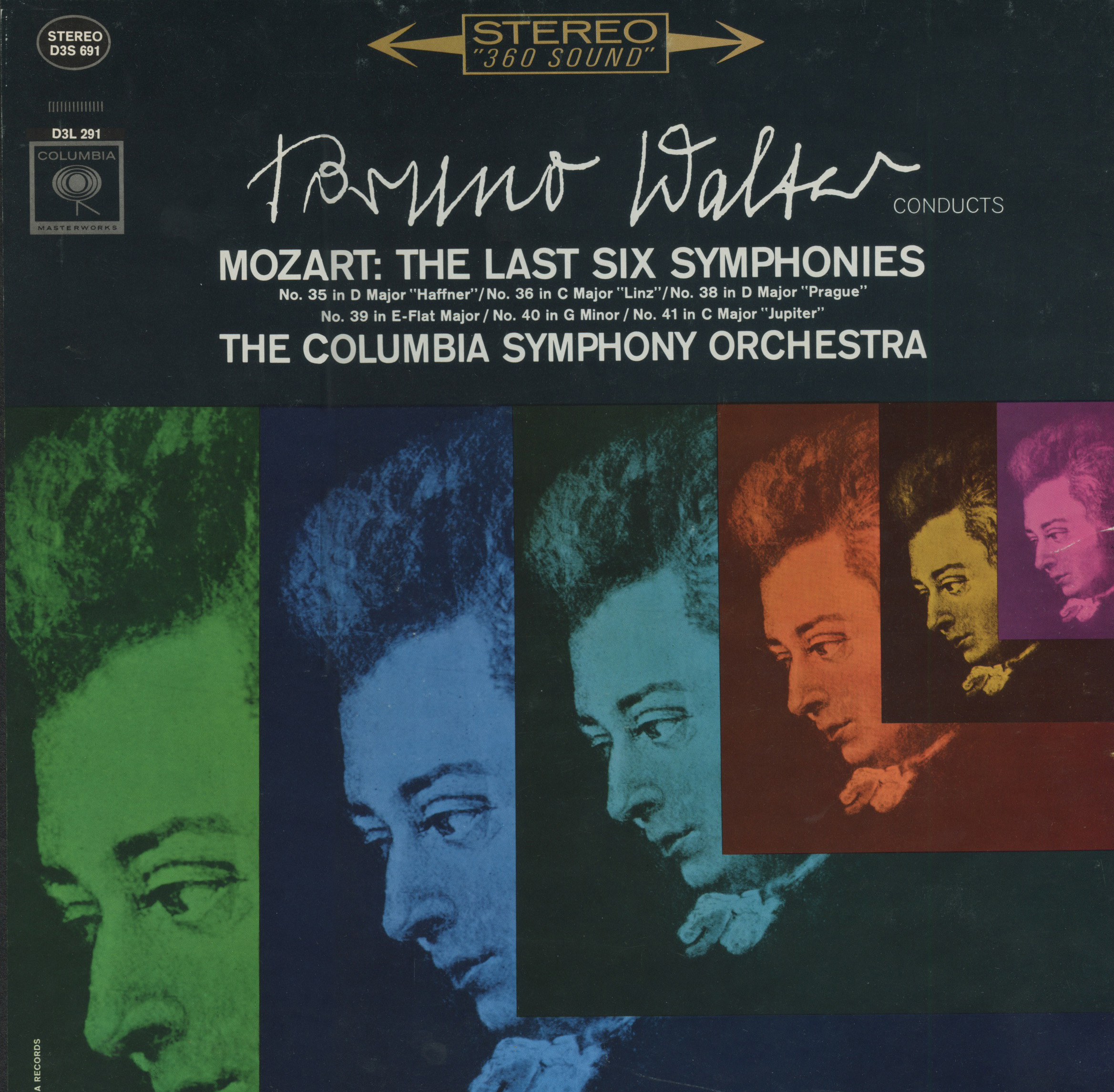
Bruno Walter’s set of Mozart’s last six symphonies with the Columbia Symphony Orchestra was released on LP in 1963, and on CD in Sony’s Legendary Interpretations series in 1991.

One way to express the difference between period and modern performance practices is to say period performances appeal more to the head, and modern performances to the heart. This is, of course, a generalization, but one that has some truth to it. I like a metaphor: period performances are like drinking from a mountain spring, which tastes pure and natural, while modern performances are like the water that comes from your tap — filtered, and with some additives to make it taste better.

The success of the so-called early music movement, especially in Medieval, Baroque and Classical repertoire, has tended to chase modern orchestras away from performing this music. This is a shame, because there are many performances of this repertoire by modern forces that are very compelling. I still fondly listen to many recordings made before the movement took hold.

I’m thinking of the old, “inauthentic” set of the Corelli Op. 6 Concerti Grossi conducted by Neville Marriner. To me, it offers a special sense of connection and musicality. And I will never forget “Dance Music of the High Renaissance,” originally released as an LP by the Archiv label in 1961, and offering Michael Praetorius’s six Dances from Terpsichore and other works with the Collegium Terpsichore and Fritz Neumeyer. This milestone recording broke early music out of the musty and academic precincts in which it had dwelt. Both of these are darn good performances, whether they are “authentic” or not.

Despite my enthusiasm for period performances, the Szell Schumann set, and Walter’s set of the last six Mozart symphonies, will always remain near the top of my musical favorites list. Again, I’m not saying modern performances practices are “better” than period ones. There are certainly many performance abuses associated with over-Romanticizing everything — think of those awful re-writings of works like Handel’s Messiah for modern forces in the mid-20th century.

The best of all musical worlds might be a blending of the two performance styles. In a 2011 New York Times article about the success of the early music movement (“Early Music is Enjoying its Moment”), English classical music commentator Nicholas Kenyon points out that even bastions of “modern, machine-tooled virtuosity” like Julliard are offering students the opportunity to learn how to perform on gut strings, wooden flutes and valveless horns, stalwarts of the period instrumentarium.

Period performance styles are influencing modern orchestras and ensembles that never use period instruments. Notes Kenyon, “Another measure of the success of the early music approach is the number of conductors who have not themselves worked with period instruments but have been inexorably affected by their sounds and textures, their transparency and clarity…”

And beyond the instruments used, period performance is now affecting the performance practices and attitudes of orchestras that still use modern instruments. As Kenyon points out, “In that sense the early music revolution, which began on the fringes, can claim to have triumphed. It has also evolved: the very term ‘early music,’ which originally denoted a repertory (pre-Classical, later pre-Romantic) and the instruments appropriate to it, has come to stand more broadly for a performance aesthetic, an approach to music in the context of its time that has been carried into the 19th and even 20th century repertory.”

In my view, that’s a big win for music.
Posted in Classical Music | Tagged , | 2 Comments

Giving up caffein — Day 4+

I have indefinitely suspended the caffein reintroduction project. Too many side effects — pulsing eyelid, nervousness, migraine headache.

Posted in Uncategorized | Leave a comment

New Book Brings Back Memories of Historic Norumbega Park and Totem Pole Ballroom

A version of this article appeared in the Newton (Mass.) TAB newspaper

Mention Norumbega Park to a Greater Boston resident of a certain age and you’ll likely evoke a flood of fond memories — dancing at the Totem Pole Ballroom, canoeing on the moonlit Charles River, the fun of exciting rides and amusements. Now, a new book by two Historic Newton authors conjures up the Norumbega magic once again.

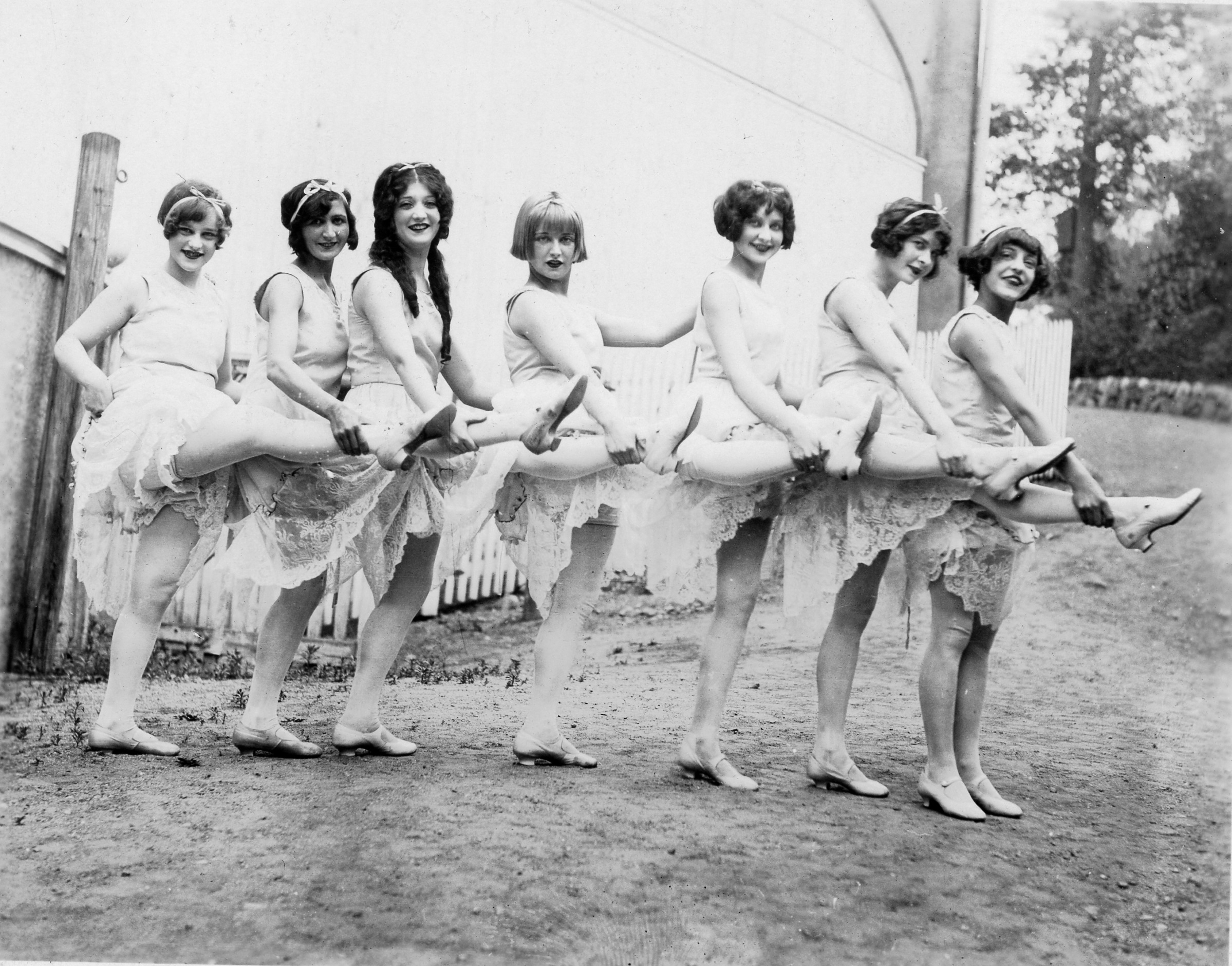
Dancing girls from Norumbega’s vaudeville shows emulate the popular “kick line” in this circa 1926 photo. (from Norumbega Park and Totem Pole Ballroom)

The book is called Norumbega Park and Totem Pole Ballroom, and it’s written by Clara Silverstein and Sara Leavitt Goldberg of Historic Newton. Silverstein is a historian and author, and Goldberg is archivist and curator of photographs and manuscripts at Historic Newton. They’ve put their talents to good use authoring a comprehensive history of the storied recreation haven on the Charles River in Newton, Mass., which closed in 1963.

The new book is part of Arcadia Publishing’s Images of America series, which celebrates the history of towns and neighborhoods across the country. The emphasis is on the images.

The book is divided into seven chapters tracing the park’s history in such themes as “Amusements for All” and “The Show Must Go on.” Full of engaging anecdotes, it offers a nostalgic walk down memory lane for older adults who visited the park, and a fascinating read for anyone interested in learning about this important piece of Greater Boston history.

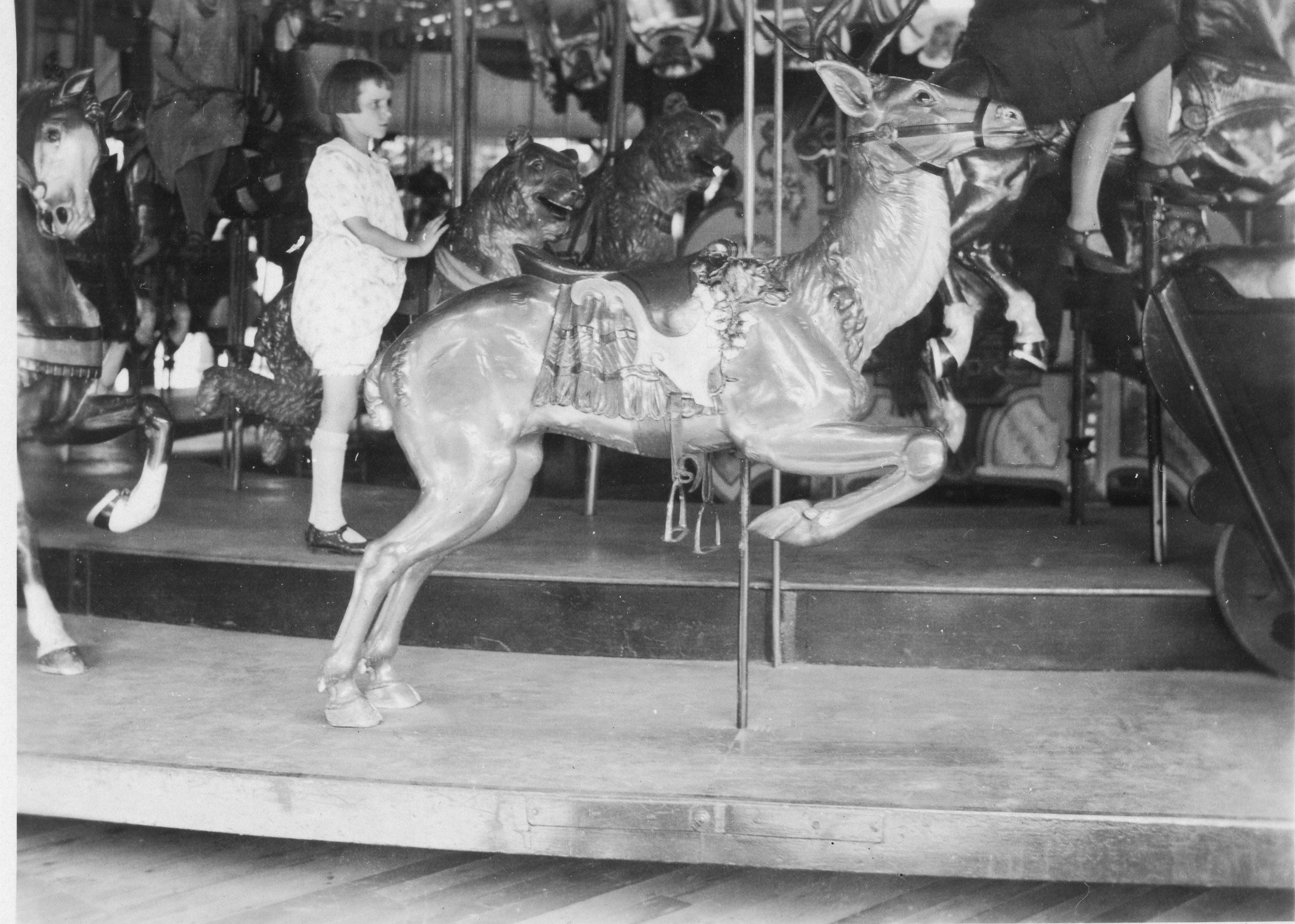
A carousel horse appears to be taking a leap as a young girl looks on in this circa 1930 picture. The horse was one of 52 hand-carved animals to grace Norumbega’s carousel. (from Norumbega Park and Totem Pole Ballroom)

Norumbega Park certainly deserves its place in that history. The park was one of many “trolley parks” opened around the country in the late 19th century by streetcar companies to encourage ridership. Norumbega began operation in 1897 at the end of the Commonwealth Avenue Street Railway line in the Auburndale neighborhood of Newton. It was an immediate success among area pleasure-seekers looking for enjoyment, thrills and an escape from the cares of the world.

The park offered family-friendly entertainments such as canoeing, amusement rides, vaudeville shows and a zoo, all in a beautifully landscaped setting. Beginning in 1930, it was home to the Totem Pole Ballroom, called “America’s Most Beautiful Ballroom.” The Totem Pole featured nationally known bands led by such renowned musicians as Guy Lombardo, Tommy Dorsey and Benny Goodman.

The Totem Pole has a special place in the hearts of people who danced there. Its strict dress code and no-alcohol policy only elevated its reputation as one of the Boston area’s classiest dance venues.

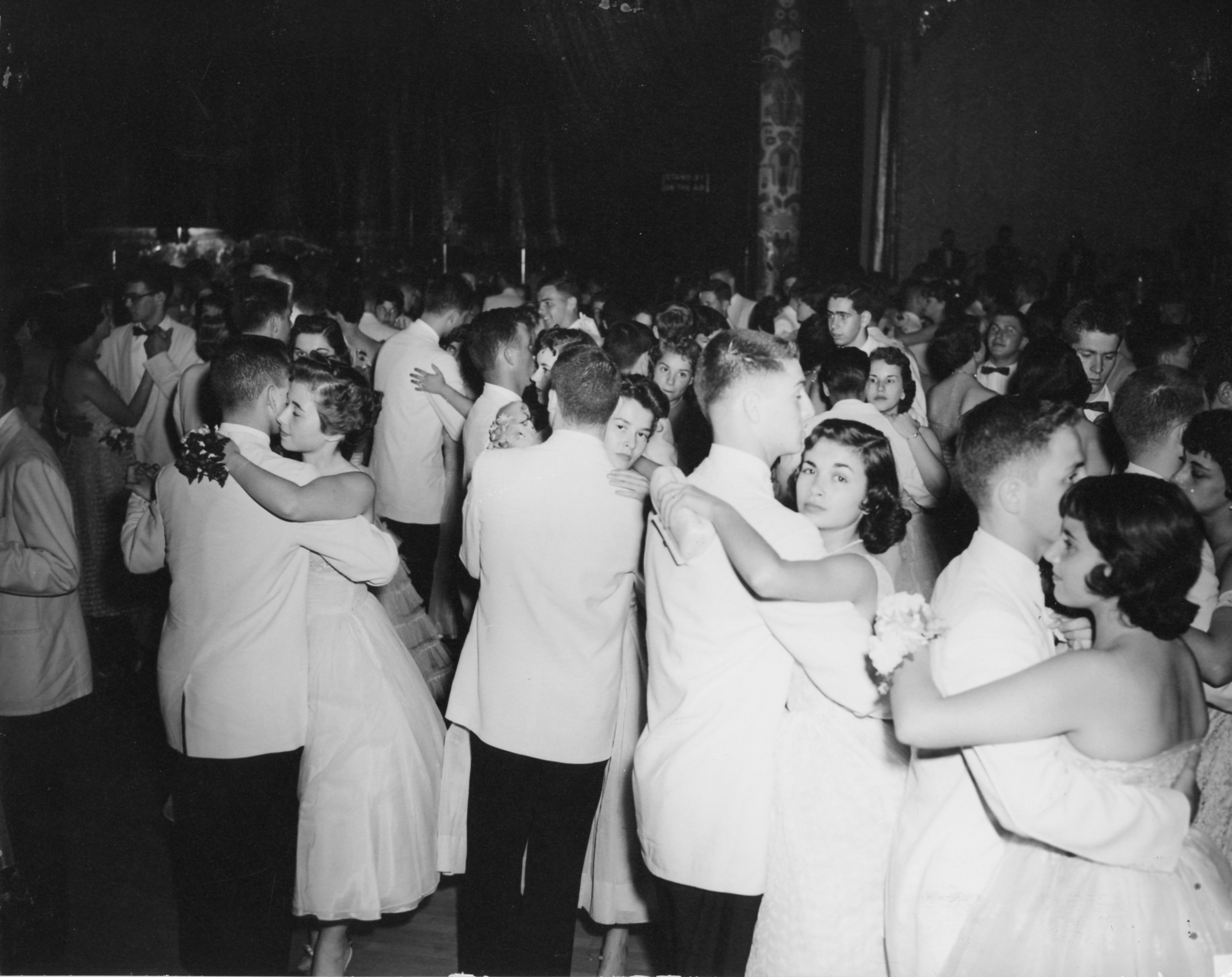
Couples are seen dancing at the Totem Pole Ballroom in this circa 1955 photo. (from Norumbega Park and Totem Pole Ballroom)

“Every boy understood that there was no more enticing offer he could make, and every girl understood the zeal of pursuit represented by the invitation,” wrote Paul Benzaquin of the Totem Pole in the Boston Herald in on November 18, 1964, as quoted in the book.

Many couples went on their first date at the Totem Pole. Local resident Jerry Proulx reminisced about taking his future wife to hear house band leader Bob Bachelder and the Totem Pole Orchestra serenade the dance crowd on a “beautiful night” in 1955. “It was a wonderful, safe place to bring a date,” he said, as quoted in the book.

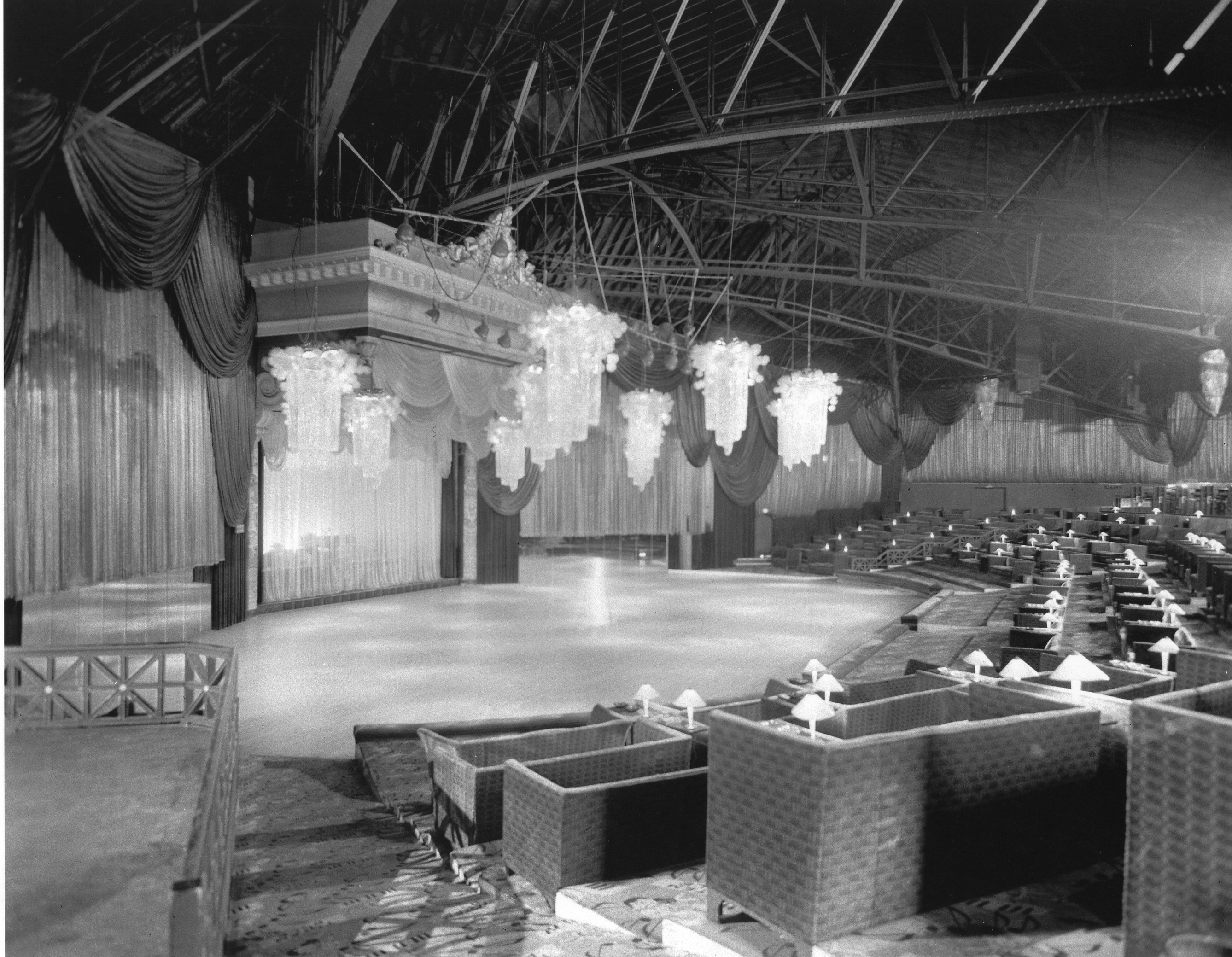
This circa 1945 view toward the dance floor and bandstand shows the lavish furnishings and tiered seating that made the Totem Pole Ballroom one of the Boston area’s most elegant dance venues. (from Norumbega Park and Totem Pole Ballroom)

The images in the book come from Historic Newton’s archives. Some of the images — such as white performers appearing in blackface as part of minstrel shows in the 1920s — illustrate that the park participated in the racial and cultural stereotyping that was common at the time. Historic Newton makes sure to emphasize that it does not condone the stereotyping evident in pictures included for historical background.

The history of the park described in the book is based largely on the work of Bob Pollock, the inexhaustible source for all things Norumbega, whose papers were donated to Historic Newton.

Pollock, who grew up in Auburndale and worked at the park as a teenager, spent the last fifteen years of his life collecting photos and memorabilia of the park. He passed away in 2005, but not before completing an (unpublished) history of the park and narrating a documentary of its history, Return to Norumbega. The video is available as a DVD at Historic Newton’s Jackson Homestead headquarters in Newton and online.

As Pollock once said of the park and the thousands upon thousands who flocked there over its 66-year existence looking for recreation and romance: “Norumbega never disappointed.” Readers of Norumbega Park and Totem Pole Ballroom won’t be disappointed either.

Posted in Uncategorized | Tagged , , | Leave a comment

Giving Up Giving Up Caffeine – 3

Day 3

I’m on Day 3 of reintroducing caffeine into my diet.

Sleeping last night was fine. I had decaffeinated black tea this morning (even decaf tea has some caffeine in it). Felt the same lift as the previous two days for about two hours.

I’m starting to focus on the quality of that lift, though. While it’s true I feel more awake, at least temporarily, there are other effects that are not all positive.

I think these other effects are what people mean when they say they feel “wired” on coffee. It’s a kind of tenseness that was not there before–the opposite of relaxation. An eyelid is tremoring slightly.

There also seems to be a difference in the character of the experience with the different beverages. The white tea was the mildest, and produced the least of the “wired” feeling. The black tea seems to produce more of the undesirable side effects. Maybe it’s the other ingredients present in the black tea (I know that white tea comes from the same leaves as black tea, but it still seems different. A chemist would probably scoff at this).

So, the experiment continues. It may be that I decide that the feeling of greater alertness is not worth the tenseness and other negative side-effects created by caffeine.

Posted in Uncategorized | Leave a comment

Giving Up Giving Up Caffeine – 2

Day 2

Here I am in Day 2 of my effort to reintroduce caffeine into my diet. Day one started off pretty smoothly — I got a lift from the cup of white tea I drank in the morning, and by afternoon the effects had mostly worn off. I must admit I had a bit of trouble getting to sleep last night — one of my big fears was that enough caffeine would be left in my system to make falling asleep difficult. But I can’t definitively attribute the difficulty to the caffeine.

My theory of why I had to give up caffeine in the first place all those years ago is that my body lost the ability to metabolize it — it just stayed in my system and accumulated until it was like I had taken a couple of NoDoz. We’ll see how things go over the next few days.

Today I tried a different kind of white tea — a Tea Forte selection. It was very flavorful, but I think it had less caffein than the previous day’s. We’ll see how the evening goes.

Posted in Uncategorized | 2 Comments

Giving up Giving up Caffeine – 1

Day One

I gave up caffeine years ago. I recently decided to try reintroducing it into my life, to combat a persistent sleepiness during the day. Today was the first experiment with reintroduction, via a cup of white tea — one of the lowest caffeine beverages.

So far, the results have been encouraging. I gave up caffeine in the 1990s when my daily cup of coffee started creating very undesirable side effects. The worst was heart palpitations which could come at any time — driving a car, during a meeting or at other inappropriate times. It became quickly apparent that I couldn’t keep up a professional career if I might have panic-like attacks during meetings.

The only remedy seemed to be giving up caffeine cold turkey, right away. To help prevent the intense headaches I got when I tried to give it up previously, the next morning I filled up a measuring cup with coffee to the one cup level. Each day thereafter, I reduced my intake by one-eighth of a cup. Eight days later, I was done with coffee and caffeine.

For a while, I drank decaf, but eventually even that began affecting me, too, and I had to give it up totally. I’ve been caffeine-free for at least a couple of decades now.

So now I’ve permitted caffeine in my system again after so many years of total abstinence. The effects this morning were mostly positive — I felt more focused and alert.

It reminded me of my friend Jim. He and his girlfriend decided to reduce their caffeine intake, for some reason, and that meant no morning tea for Jim. He had been an inveterate and long-time morning tea drinker. He told me about one caffeine-less morning, when he was feeling hopeless and morose. He had prepared a thermos of iced tea to have with lunch. When he drank the tea that afternoon, he said he suddenly felt alive and “plugged in.”

Well, we will see how this goes. As of this writing, in the afternoon of “C-day,” I’m feeling like most of the effects have worn off. Will I have trouble sleeping? Will I get headaches? I’ll write about my experiences over the next few days.

Posted in Uncategorized | Leave a comment

Historic Photo Recalls Innovative Newton, Mass., School

The Newton TAB published my article about the historic Allen School in West Newton, Massachusetts, in its July 5 issue

One of my favorite parts of many history documentaries is when a vintage image of a location appears on screen, and slowly fades to reveal how that place looks today. It creates a connection between then and now that we rarely make in our fast-paced, in-the-moment world.

I was recently struck by a past image of the Allen School in Newton, Massachusetts. The photo, which is in the archive of Historic Newton, features students at the forward-looking West Newton institution that, beginning in the mid-19th century, pioneered mixed-race coeducation and introduced many innovations into the curriculum.

The photo is not dated, but, according to Historic Newton Archivist Sara Leavitt Goldberg, it was likely taken during or just after the Civil War.

The students are seen posing in the driveway in front of the home of the school’s founder and principal, Nathaniel T. Allen, a prominent educator, abolitionist and social reformer. The image shows some 25 students spread out in front of the house, located at 35 Webster Street in Newton, staring into the camera.

Although the students aren’t smiling (photographs were a serious affair back then), they radiate a kind of joy and quiet confidence. It’s almost as though they’re saying, “I’m so glad to have this chance to develop my talents to improve the world.”

A trio of young men dominate the foreground: On the left is a sportsman, wearing a rakishly tilted bowler hat and leaning on a bat. In the middle there’s a boy in a fisherman’s cap who looks like he just came back from work. Finally, on the right is a young man in a straw hat standing ramrod straight, looking like he might be about to go boating.

A Black student in the middle ground leans nonchalantly against a bat. His stance and relative prominence seem to say, “I belong here.”

A group of young women, looking positively glowing in their hoop skirts and fashionable hats, can be seen on a strip of lawn behind him. Some mischievous boys have climbed out a second-story window and sit on the roof of the entryway, and a seemingly shy young man at the extreme left peeks out from behind a trellis.

The students had much to be proud of in their school, called the West Newton English and Classical School. It was located at the site of the current Unitarian Universalist Church in West Newton Square, according to Goldberg. Founded by Allen in 1854, the school quickly became a model for progressive education.

According to a history of the Allen House and School on the Historic Newton website, not only did the school provide equal opportunities for both girls and boys in racially mixed classrooms, but it also housed one of the earliest kindergartens in the country and was the first to include physical education in the curriculum.

By the end of its 50-year life span, the school had some 4,000 alumni hailing from all 50 states, Europe, Central and South America, and Asia, according to Historic Newton documents. Graduates went on to careers in education, medicine and law.

Among the school’s alumni were Rebecca Lee Crumpler, the first Black woman in the U.S. to receive a medical degree. Graduate Mary Anne Greene received a law degree from Boston University and was admitted to the Suffolk County bar. She was the first woman to publish in the American Law Review and to argue a case before the Rhode Island Supreme Court, according to Stanford University’s Women’s Legal History Biography Project.

The school touted alumni accomplishments in annual catalogs and other publications now archived at the Jackson Homestead and Museum on Washington Street in Newton. It also invited former students back for regular reunions. Greene – an 1873 graduate – returned for the 1893 reunion and encapsulated her school’s philosophy in an address subsequently printed in “An Illustrated Biographical Catalog” of the school published in 1895.

The development of character was the school’s “truest education,” Greene said, adding, “Distinction of age, sex or race cannot exist upon this broad foundation. It is what the scholar is capable of as a free agent, with the help of God, that determines eligibility to membership in this school. … For those of any race who desire to develop the good that is in every human being, there is a hearty welcome.”

She also said “there should be nothing bold or unnatural about a woman doing the work for which she is best suited, not even though the work lies in a field chiefly occupied by men.”

The legacy of the innovative Allen School helped enshrine the value of education in Newton, according to Historic Newton’s Goldberg. The school building itself is long gone, but the Allen House still exists as a monument to the work of its founder. The graceful structure, with its distinctive tall columns, is a West Newton landmark. It is currently home to the Newton Cultural Alliance.

There is a way you can still see the scene depicted in that long-ago photo. Go to 35 Webster Street and stand at the end of the driveway. Look toward the entryway. If you squint just right, and use your imagination, you’ll be able to make out those students, standing tall and proud, gazing over your head toward the future.

Posted in Uncategorized | Leave a comment

Black History is American History

This commentary piece of mine appeared in the Newton (Mass.) Tab on February 24, 2021

During Black History Month in February, we focus on the contributions of Black Americans to the American story. However, by confining our attention to one month out of the year, we risk ignoring those contributions the rest of the year. The truth is, Black history is an integral part of American history — we should recognize at all times how intertwined it is with that history. This recognition is essential to overcoming the persistent racism we are still contending with, both locally and as a nation.

I was not born a New Englander — I grew up in a small West Virginia town called Nitro. It is predominantly white — there were no Black classmates in my grade school in the 1960s. I never thought much about how Black history might have affected my little community, and I certainly never imagined we had any connection to slavery. I suspect my history education was typical of what schoolchildren learned all over the country — an avoidance and glossing over of the history of inequity and systemic racism that has plagued our country since the beginning.

It was only relatively recently that I learned that before the Civil War, the future site of Nitro was host to the Bolling farm, owned by the largest slave holder in the Kanawha Valley. If I had known this when I was growing up there, it would have transformed my understanding of my community and encouraged me to take more responsibility for challenging the status quo.

I have always tried to acquaint myself with the history of every community I live in. So when I moved to Newton in the mid-1990s, I began studying the history here. I discovered slavery was not only an issue in the South. An 1889 compilation of wills and death records from 1681 – 1802, and subsequent research, showed 45 enslaved people were owned in Newton during that period, a figure that is believed to represent only a small fraction of the actual number enslaved here, according to Historic Newton. And it’s well known that New England industrialists had a symbiotic relationship with the Southern growers whose cotton they processed in their mills.

Despite its connections to the slave-based economy, Newton produced many examples of anti-slavery activism and striving for equality. Many local citizens were leaders in the abolition movement. The city was the site of two stations on the Underground Railroad that sheltered escaped enslaved persons. Nathaniel Allen, a prominent Newton abolitionist, founded a model school in 1854 that welcomed racial and gender diversity.

It was this reputation as an abolitionist center that undoubtedly drew many Black migrants from the South to the Garden City after the Civil War. Newton became home to the largest suburban Black community in the Greater Boston area. Its spiritual home is Myrtle Baptist Church on Curve Street, which from its earliest years nurtured many leaders in Newton’s efforts to become more inclusive.

But as relatively progressive as Newton was, it still participated in the racially discriminatory patterns that held sway throughout much of the 20th century and up to the present. When the Mass Turnpike extension sliced through West Newton in the early 1960s, the neighborhood around Myrtle Baptist was especially hard hit. Renters and homeowners whose dwellings were taken had a hard time buying or renting homes in the city, and many were steered by real estate agents to inner city locations far from the leafy suburb they called home.

As recently as last June, Newton was the site of a painful racial profiling incident, as police officers seeking a suspect confronted a Black former Northeastern University employee who owns a home in Newton. One of the officers had a gun drawn during the incident, police confirmed. Incidents like this perpetuate Black citizens’ feeling they are not fully accepted here.

So, as we confront the continuing reality of discrimination, let us look to a more inclusive and wholistic understanding of our history to guide us. It’s true that Newton has taken part in many of the shameful aspects of the past and continues to be affected by them. But we also have in the activism of many past and current citizens an abiding commitment to change. We can draw strength from the legacy of the abolitionists, educational pioneers, and Black citizens and their allies who, more than a century and a half ago, envisioned a future of justice and equality.

Posted in Uncategorized | Leave a comment

In Praise of Rabbit Holes

alice-white_rabbit_reducedThis is my first blog about retirement since signing off at Olin College on January 1. I am glad to report that all is going well. I have overcome many difficulties: I have adjusted to sleeping longer, having more time to myself and doing without daily pressures to get a lot of things done.

Seriously, it does take some adjusting. Previously, the pressures of work reduced personal time to evenings and weekends — but the knowledge that the time for personal projects was limited provided a certain drive to get those projects done. Now, it’s a little too easy to just say mañana, especially with the lack of commanding to-do lists.

Here is a status report on the things I thought I would be doing after retirement:

– Taking up the piano again – no
– Online classes – no
– Yoga – no
– Organizing CD collection – no
– Learning a new language – nein
– Getting life together – no

Really, the report on all of these should be “not yet.” The reasons I haven’t made progress on these projects are twofold: 1) I have been advised, and I think it’s good advice, not to dive into too many things at once and, 2) my days are fairly full. I am learning to compose music. I am involved in an effort to bring international businesses to the local area and increase connections with educators and entrepreneurs. I’m working with the local historical society as a board member. I’m doing some projects for Olin College. I participated in a Civics Bee. These activities fill up my days.

I start my mornings in a basement room that is warmer than the rest of the house — a welcome setting on these still-cold mornings. Sunlight filters in through the high windows. I play quiet classical music on the radio as I catch up on the day’s events and commentary. For a news junkie like me, this is heaven. Then I start my day.

In the greater amount of free time that exists around my various activities, there is also the opportunity to “go deeper” on passions and interests — to spend that extra time finding articles about a topic of interest, reading a poem, listening to a piece of music, having long conversations. In pre-retirement days, there was always an invisible clock ticking in the background that kept me moving along, making such deeper engagement difficult.

When I described my ‘going deeper’ concept to a colleague before I retired, she said, “Oh, you’re going to be going down rabbit holes.” I didn’t think that was exactly what I meant, but as I thought about it, it wasn’t a bad description of my plan. The thing is, there are good rabbit holes and bad rabbit holes. Good rabbit holes can lead to wonderland; bad ones are just a waste of time.

Good rabbit holes: the aforementioned extra time to read, research, enjoy music, become involved in community life and listen to people. I’ve always felt that by indulging your passions, and letting them take you where they may, you discover more about yourself and get closer to the place where your interests coalesce into a philosophy and approach to life. Bad rabbit holes: warring with your appliances.

Now I have to admit I haven’t gotten into doing a lot of housework since being retired, but the other day, I got out a portable electric vacuum to pick up some dirt on the kitchen floor. I am sure this vacuum company has made many fine products, but its Model 1189 cordless vacuum is not one of them. When it’s on, it makes a loud high-pitched whine kind of like a convention of dentists’ drills. While it does a decent job of picking up dirt, it’s really hard to empty. This is where my difficulties began.

Now in my previous life, I would have simply moved on and resolved to empty the vacuum later. But in my new, abundant-free-time life, I thought, “Well, I will take the opportunity to fix this thing.” But I could not for the life of me get the dirt canister off. I spent quite a few minutes twisting and pulling, and eventually got out tools to try to pry it off. Suddenly, unexpectedly, it flew off, dumping the dirt onto the just cleaned floor.

When things like this happen, I am tempted to believe inanimate objects possess a malevolent consciousness and are out to stymie me. What happened next lent credence to this theory. I reattached the canister, cleaned up the dirt and continued vacuuming, whereupon the canister suddenly ejected again, strewing dirt everywhere a second time.

Score one for the sweeper. And I’m left standing at the bottom of a rabbit hole that led only to roots and mud, staring at a small circle of sky high above.

For those of you who worry that I’m spending my time going down the bad rabbit holes, let me reassure you that most of my rabbit hole adventures have been of the good kind. But, to help distinguish between the good and bad rabbit holes, I have developed some do’s and don’ts that will help the recently retired have a high quality of life and avoid misadventures:

DO

– Develop a framework for every day—I try to experience learning, entertainment, time with friends and family, and transcendence each day. (Transcendence is a tricky one to check off every day, but, for me, it usually involves listening to music. As the weather improves, it might involve nature walks.)
– Create a to-do list and keep a calendar.
– Take a shower every day.
– Leave well enough alone.

DON’T

– Start binge watching YouTube.
– Keep checking the laundry to see if it’s done.

Well that’s my report on retirement two and a half months in. You’ll have to excuse me, I just saw a large rabbit running through the underbrush in my yard. I want to go check and see if he’s carrying a pocket watch.

Joe Hunter
March 2019

Posted in Uncategorized | 3 Comments

The Internet of Kinks

Quite a few commentators have noticed that the names of many Internet companies are childish, even infantile. Without a second thought, we use Internet services that sound like baby talk—Google, Yelp, Skype, Doodle, Zillow, Etsy and Hulu. In many cases, the grander the aim—say universal communication— the more baby-ish the name. Twitter, I’m looking at you and your little bird logo.

The names, composed by dropping vowels (Flickr), shoving words together (Pinterest), intentionally misspelling words (Lyft), adding random suffixes (Spotify) and other conventions, very often have clever second, or even third meanings.

All of this makes me think of the neologistic possibilities inherent in the phenomenon known as the “Internet of Things.” The Internet of Things is a big deal. It means that everyday objects that currently work independently and are “dumb”—like appliances or TVs or alarm systems—will suddenly become networked and “smart,” i.e., connected to the Internet and controllable on your cell phone.

This opens up whole new worlds of potential appliance collaboration: on a prosaic level, it could be things like your house switching on the air conditioning as you approach home at the end of the day, or turning on the lights.

I imagine a more advanced appliance collaboration, such as my oven detecting through the odors going through the hood that I’m making bean burritos. The oven alerts the plug-in air freshener to release scented oils and sends my wife a text alert.

This will also open up whole new universes of enterprises and apps. In the interest of advancing this brave new world, I am offering my list of potential Internet businesses of the future. You’re welcome, tech entrepreneurs!

Clank: This app introduces the “smart” highball glass. It monitors your alcohol intake. When you’ve drunk too much, the app contacts AAA, your therapist or law enforcement, depending on your preference settings.

Dipchat: This app monitors your Facebook posts for friends whose posts you haven’t liked or haven’t read recently, and auto-posts insulting comments when they upload a picture. Things like “Your clothes are mismatched,” or “You look funny.” This is a way of culling your friends list when it gets too big.

ClipTrip: For people who don’t have enough money to travel to exotic places, clip trip will scour the Internet and offer images of dream trips to foreign locales, which you can share with friends as though you actually went there.

ParaNet: This app offers up a bouquet of conspiracy theory websites and news of government overreach, infringements of Second Amendment rights, etc.

Grater: This app periodically searches your cellphone for inane and useless apps you’ve downloaded and eliminates them.

ToiletTracker: Just joking! This one already exists. It’s an Android app that “records details about toilet usage” and “integrates with Facebook to provide public notification of toilet usage to friends.” In the Internet world of the future, you can’t share too much!

Sorry, I’ve got to go—my cellphone just went crazy. Apparently Grater just eliminated most of my apps—including itself.

–Joe Hunter

Posted in Uncategorized | 2 Comments