
I am a big fan of historically informed performance (HIP) in classical music, also known as period instrument performance, also known simply as “authentic performance.” The idea behind it is a good one: we should seek to be faithful to the approach and style prevalent when the music was written, as well as the types of instruments used at that time.
I am an enthusiastic attendee at the bi-annual Boston Early Music Festival, where I happily nerd out on authentic Baroque operas, chamber music and orchestral works. One of my favorite activities is walking around the Exhibition, and seeing all the period instrument makers hawking their wares.
Who could doubt the value of historically informed performances after hearing the Christopher Hogwood/Jaap Schroeder set of the Complete Mozart Symphonies with the Academy of Ancient Music? The insights afforded by hearing the music as Mozart would have conceived it is really eye-opening.
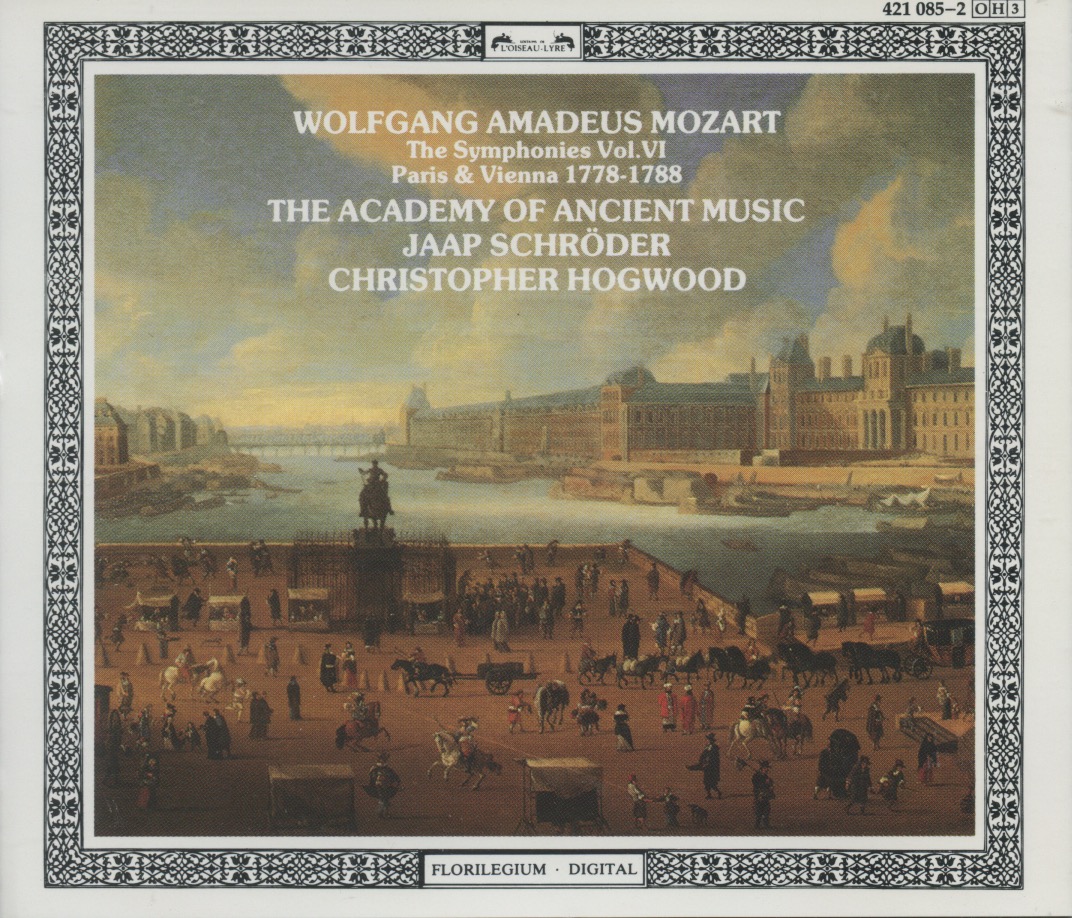
There’s a big drawback to the whole movement, though. It’s that we don’t actually know how works would have been played in Mozart’s time. Recordings weren’t available until the late 19th Century. Supporters of HIP have tried to get around this by studying musical treatises and reviews of the time, painstakingly reproducing the instruments prevalent in the Baroque and Classical eras and even examining paintings of period instruments and ensembles in an attempt to divine performance practices.
The severest critics of the movement see the whole thing as a projection of 20th century assumptions onto the past. No less a leading light of the period performance revolution than the English conductor John Eliot Gardiner has pushed back against the term “authentic” when applied to performances that seek to emulate practices of the past. In a profile published in 1996 in Billboard, Gardiner says, “My enthusiasm for period instruments is not antiquarian or in pursuit of a spurious and unattainable authenticity, but just simply as a refreshing alternative to the standard, monochrome qualities of the symphony orchestra.”
While we may never attain true “authenticity” in performances of music from past centuries, there is value, in my opinion, in striving to imagine the music as composers and audiences would have heard it when it was written. If nothing else, it may lead to performances that are more balanced and nuanced than those that we hear today of those works. That’s because modern performance practices, as critics point out, are biased toward conventions that became prevalent during the Romantic period of the middle-to-late 19th century.
Gardiner, for one, has been a leader in bringing period performance out of the pre-Classical and Classical eras in which it got its start and solidly into the 19th century. His critically acclaimed recording with the Orchestre Revolutionnaire et Romantique of Schumann’s symphonies and symphonic fragments, for example, demonstrates that period performance practices offer new ways to hear even works written in the Romantic era.
In his liner notes to the set, Gardiner says he seeks to “explode” the myths surrounding Schumann’s music, such as the myth that his symphonic works are under-orchestrated — beliefs that led composers like Gustav Mahler and conductors like Felix Weingartner to re-orchestrate Schumann’s symphonies to correct perceived deficiencies.
“Our starting point is the removal of the false patina of late-Romantic orchestral sonorities which is totally alien to Schumann’s aesthetic and ideals and yet persists in some performances today using conventional symphonic forces,” says Gardiner. “So much of what troubled [later] composers and conductors … about Schumann’s symphonic writing … simply evaporates in an accomplished period performance.”
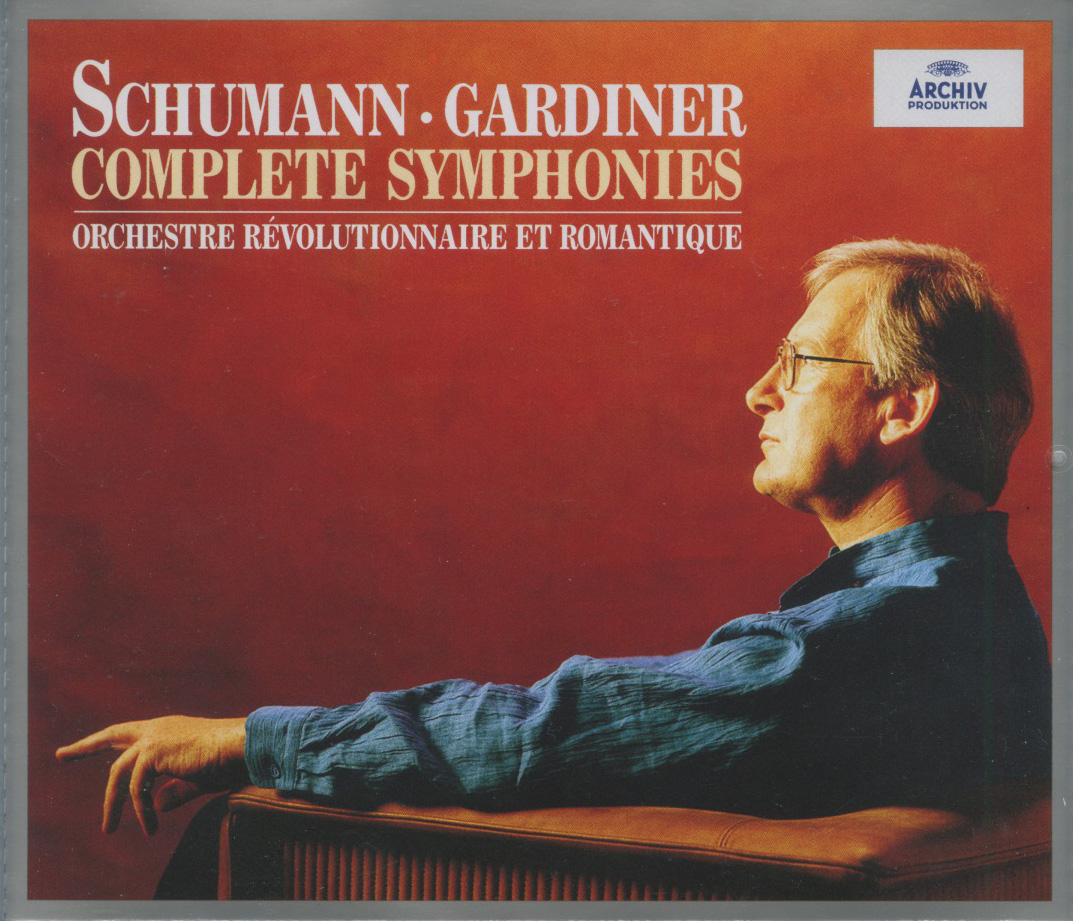
Especially important, according to Gardiner, is to reduce the “expanded sonority” of late 19th century orchestras to something like the size of the orchestra Schumann was writing for. “The moment you reduce the proportions of the ensemble, as we have done, to around 50 or so players, so as to replicate those of the Leipzig Gewandhaus Orchestra of the 1840s, you begin to create those for which Schumann had assiduously fashioned his symphonies.”
I’m something of a Schumann symphony freak — I own not only the complete set of symphonies conducted by Gardiner, but also those performed by George Szell and the Cleveland Orchestra, Leonard Bernstein and the Vienna Philharmonic and Christoph von Dohnanyi and the Cleveland Orchestra. I even have a performance of the Mahler re-orchestration. My hands-down favorite set is the Szell/Cleveland Orchestra performances, which were recorded in the late 1950s – early 1960s and reissued on CD in 1996 by Sony Masterworks Heritage in very fine sound.
I recently undertook some comparative listening of period and modern performances of several familiar works to focus on the distinguishing features of each, starting with the Gardiner and Szell Schumann sets.
I have to say, the Gardiner set offered many new insights. Generally, the performances were taut and exciting, and faster paced than the “traditional” Szell performances, which were released before the period instrument movement gathered steam.
I can see what Gardiner means when he talks about the balance offered by the pared down forces. The performance of the Symphony No. 4 in its revised (by Schumann) version is thrilling, and the orchestral forces seem in perfect equipoise. Szell, who apparently did some tinkering on the scoring, opts for more relaxed tempos, especially in the slow movements. The sound seems to bloom out, coming across as fuller than what Gardiner is able to attain.
The Gardiner set hasn’t displaced the Szell recordings in my Pantheon, but I think the point is not to try to proclaim either approach “better” than the other, but to enjoy each for what they have to offer.
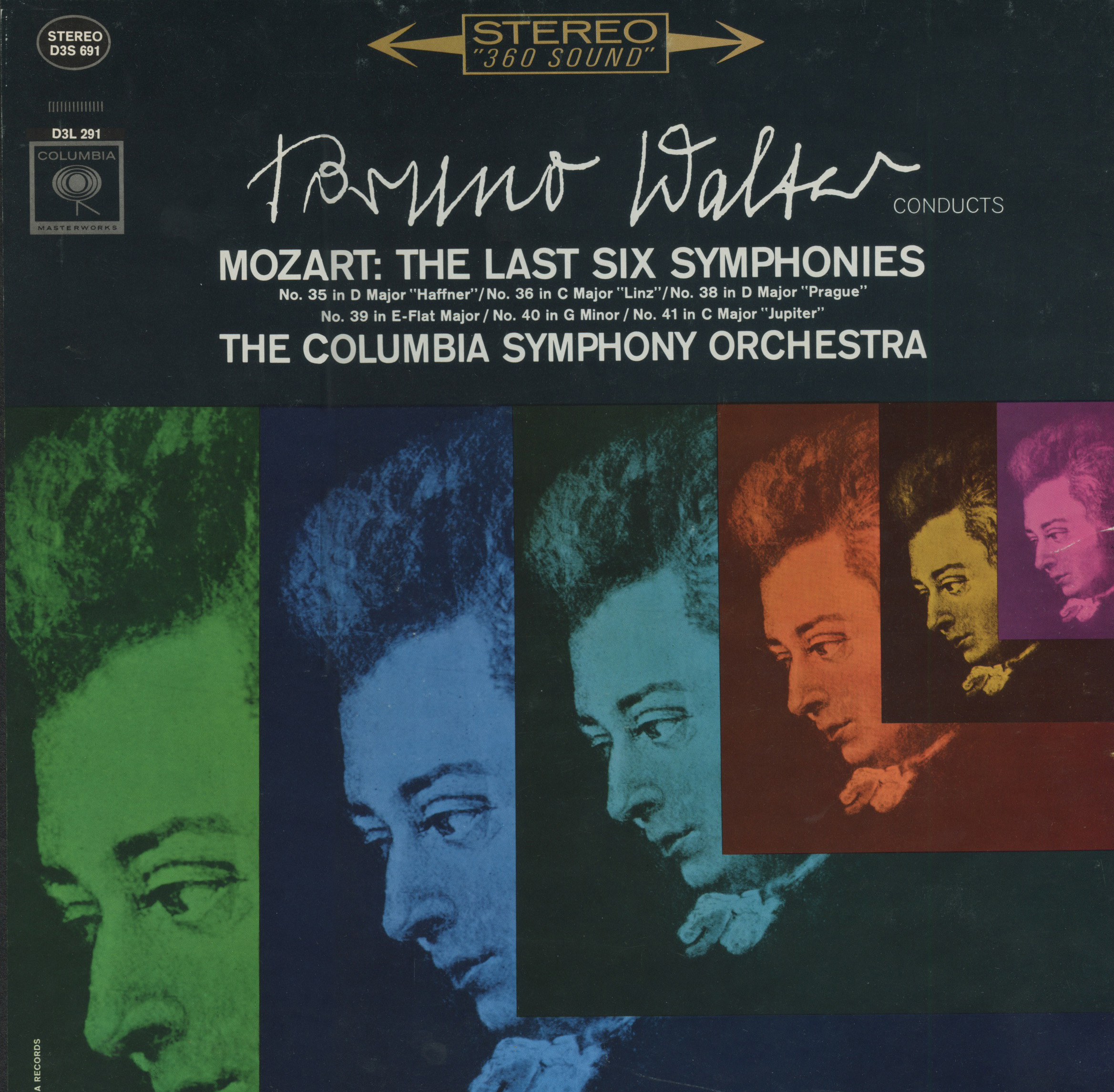
I also compared the Hogwood/Schroeder Mozart symphony set to a personal benchmark recording from the past, that of the last six symphonies of Mozart performed by the Columbia Symphony Orchestra under Mahler disciple Bruno Walter. Symphony No. 39 offers good comparison points for period vs. modern performance practices.
Like the Gardiner set, the Hogwood/Schroeder performance was generally faster paced. I felt the period performance was more transparent, allowing all the orchestral voices to be heard more easily. With the larger modern orchestra, and the generally bigger sound, some of this detail was lost. On the other hand, the generally slower tempos allowed Walter to lovingly draw out the musical lines, an approach that was used to especially good effect in the Andante con moto movement. Adjectives that occurred to me to describe the Walter performance were “emotional,” “piquant,” and yes, “Romantic” (in the musical history sense).
One way to express the difference between period and modern performance practices is to say period performances appeal more to the head, and modern performances to the heart. This is, of course, a generalization, but one that has some truth to it. I like a metaphor: period performances are like drinking from a mountain spring, which tastes pure and natural, while modern performances are like the water that comes from your tap — filtered, and with some additives to make it taste better.
The success of the so-called early music movement, especially in Medieval, Baroque and Classical repertoire, has tended to chase modern orchestras away from performing this music. This is a shame, because there are many performances of this repertoire by modern forces that are very compelling. I still fondly listen to many recordings made before the movement took hold.
I’m thinking of the old, “inauthentic” set of the Corelli Op. 6 Concerti Grossi conducted by Neville Marriner. To me, it offers a special sense of connection and musicality. And I will never forget “Dance Music of the High Renaissance,” originally released as an LP by the Archiv label in 1961, and offering Michael Praetorius’s six Dances from Terpsichore and other works with the Collegium Terpsichore and Fritz Neumeyer. This milestone recording broke early music out of the musty and academic precincts in which it had dwelt. Both of these are darn good performances, whether they are “authentic” or not.
Despite my enthusiasm for period performances, the Szell Schumann set, and Walter’s set of the last six Mozart symphonies, will always remain near the top of my musical favorites list. Again, I’m not saying modern performances practices are “better” than period ones. There are certainly many performance abuses associated with over-Romanticizing everything — think of those awful re-writings of works like Handel’s Messiah for modern forces in the mid-20th century.
The best of all musical worlds might be a blending of the two performance styles. In a 2011 New York Times article about the success of the early music movement (“Early Music is Enjoying its Moment”), English classical music commentator Nicholas Kenyon points out that even bastions of “modern, machine-tooled virtuosity” like Julliard are offering students the opportunity to learn how to perform on gut strings, wooden flutes and valveless horns, stalwarts of the period instrumentarium.
Period performance styles are influencing modern orchestras and ensembles that never use period instruments. Notes Kenyon, “Another measure of the success of the early music approach is the number of conductors who have not themselves worked with period instruments but have been inexorably affected by their sounds and textures, their transparency and clarity…”
And beyond the instruments used, period performance is now affecting the performance practices and attitudes of orchestras that still use modern instruments. As Kenyon points out, “In that sense the early music revolution, which began on the fringes, can claim to have triumphed. It has also evolved: the very term ‘early music,’ which originally denoted a repertory (pre-Classical, later pre-Romantic) and the instruments appropriate to it, has come to stand more broadly for a performance aesthetic, an approach to music in the context of its time that has been carried into the 19th and even 20th century repertory.”
In my view, that’s a big win for music.

 Hunter's Window
Thanks, Joe, for a culturally enriching article, Best wishes, Azam
A culturally enriching boon for all serious music lovers!